

Comparing Gaming Analytics Software, Coaching Tools, and Rank-Tracking Systems
Competitive gaming tools measure different things. Tracker Network documents match histories, operator statistics, and seasonal summaries, while Aimlabs provides aim benchmarks and customizable practice playlists. These examples illustrate three overlapping categories: performance analytics for reviewing past matches, coaching and training tools for directing practice, and rank trackers for monitoring competitive progression. Choosing between them starts with identifying the question a player needs answered.
The broader ecosystem also includes third-party ranking assistance. BuyBoosting lists professional R6S services offering either accompanied play or another player operating the customer’s account. Those arrangements should be evaluated separately from analytics and instruction. An externally influenced rank increase is not sufficient evidence that the account owner’s independent gameplay has improved. That distinction matters when comparing software intended to measure development.
Which Question Should Each Tool Answer?
For practical comparison, treat analytics as a diagnostic tool: where do recurring problems appear? Treat coaching as interpretation: why might those problems happen, and what should change? Treat rank tracking as a progress record: how have competitive results developed over time? These are useful evaluation categories, rather than rigid product boundaries.
Tracker Network demonstrates that overlap. Its desktop application combines detailed match timelines with map, weapon, and operator breakdowns, plus daily, seasonal, and lifetime summaries. One application can therefore support both performance analysis and progression tracking. The purchasing question should concern useful depth, rather than how many categories appear in its marketing.
More Data Needs Better Questions
Start an analytics evaluation by asking what the application actually collects. Does it record individual matches, summarize account totals, or require a desktop application during play? Request clear explanations of collection methods, supported platforms, update timing, and missing records. Without those details, avoid treating a detailed dashboard as proof of complete coverage.
Reporting accuracy deserves a separate check. Compare several recorded matches against their available results. Examine whether dates, modes, and totals agree. Ask whether percentages include a visible match count. A dashboard should make its evidence inspectable, especially when it presents recommendations or predictions that appear more authoritative than the underlying records justify.
For example, a weak map record should prompt investigation before a conclusion. Review the relevant rounds, roles, and decisions. My view is that analytics becomes valuable when it narrows a question worth testing. A red indicator alone should not become a diagnosis, particularly when the application offers no explanation for its assessment.
Where Coaching Adds Context
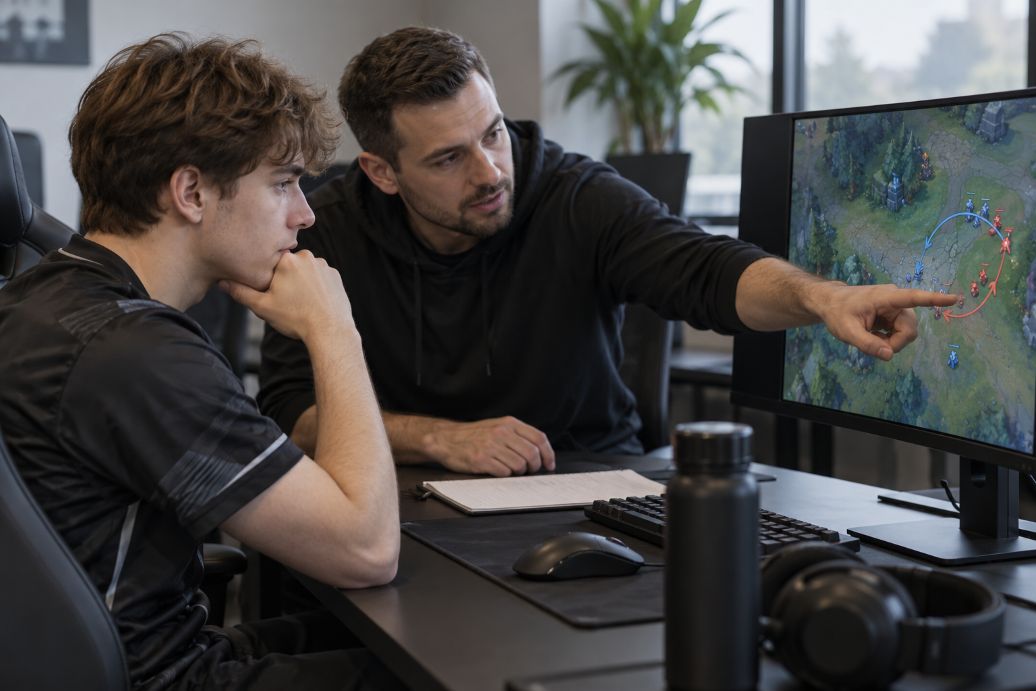
Coaching offers a different input: discussion around observed gameplay. A Rainbow Six Siege session listed on Metafy, for example, describes reviewing recorded matches or live screen sharing, followed by improvement notes and questions. This documents a contextual review process, although the listing itself does not establish how effective that instruction will be.
Consider a player who repeatedly loses opening engagements. An automated report might flag the pattern. A useful coaching review should then examine positioning, available information, timing, and the player’s explanation. That is the standard I would apply: does the coach investigate the decision, or simply repeat what the scoreboard already shows?
Training software offers a more repeatable practice structure. Aimlabs describes benchmarks covering skills such as reactive tracking and micro flicking, alongside custom playlists and repetition settings. Those features support structured practice comparisons. However, I would still require evidence from actual matches before interpreting a better exercise score as broader competitive improvement.
Can You Use the Interface Consistently?
Evaluate user experience through ordinary tasks. Find last week’s matches, isolate one recurring weakness, and identify a suitable practice activity. Consider how clearly the software organizes that information, a broader concern also relevant to organizing information in a gaming business. Prefer clear labels, readable summaries, and relevant filters. Customization should help answer your question, rather than create another collection of settings to maintain.
Platform compatibility also needs verification. Tracker Network states that its Rainbow Six desktop overlay requires Windows and does not support console play. Its documentation also acknowledges that running additional software consumes resources. Test the relevant application on your own setup before committing to a workflow built around its desktop features.
Why Rank Still Needs Interpretation
Rank deserves attention, but its meaning depends on the system. In its published Ranked 2.0 explanation, Ubisoft distinguished visible rank from a hidden skill estimate used for matchmaking. That historical design illustrates why a displayed badge and an estimate of ability should not automatically be treated as interchangeable measurements.
For personal evaluation, keep assisted sessions separate from independent matches. Review comparable gameplay and document the behavior you intended to change. Account sharing also warrants policy scrutiny: Ubisoft identifies it among the behaviors targeted in its Year 11 player-protection announcement. A provider’s reassurance should never replace checking the publisher’s applicable rules.
Choose Evidence You Can Act On
Before connecting an account, inspect permissions, credential requests, privacy terms, recording practices, and deletion options. Ask who can access uploaded gameplay and whether recordings may be reused. Set a clear boundary: disclose only what the chosen function requires, and reject unexplained access requests.
The strongest evaluation combines purpose, transparency, reliability, and measurable practice. Choose a tool that answers a specific question, explains its evidence, and supports a repeatable review routine. Judge coaching and ranking assistance separately. Ultimately, favor improvements you can demonstrate through independent gameplay, with rank serving as one reference point.