Critical Role of Software in Instagram Tools and Services

Digital marketing has transformed significantly with the emergence of specialized platforms designed to optimize social media performance across various industries. Instagram tools and services have become essential components of modern business strategies. Often, you’d see these tools offering sophisticated analytics, content management, and audience engagement capabilities.

AI and its Different Applications

These comprehensive solutions enable organizations to maintain consistent brand presence while maximizing their return on social media investments. Professional marketers rely on these platforms. A few of the tasks it helps include but not limited to strategic content scheduling, tracking performance metrics, and identifying trending topics that resonate with their target audiences.

The integration of artificial intelligence within these services has elevated their effectiveness, providing predictive insights and automated optimization features that drive meaningful engagement.

Intelligent Automation in Digital Marketing
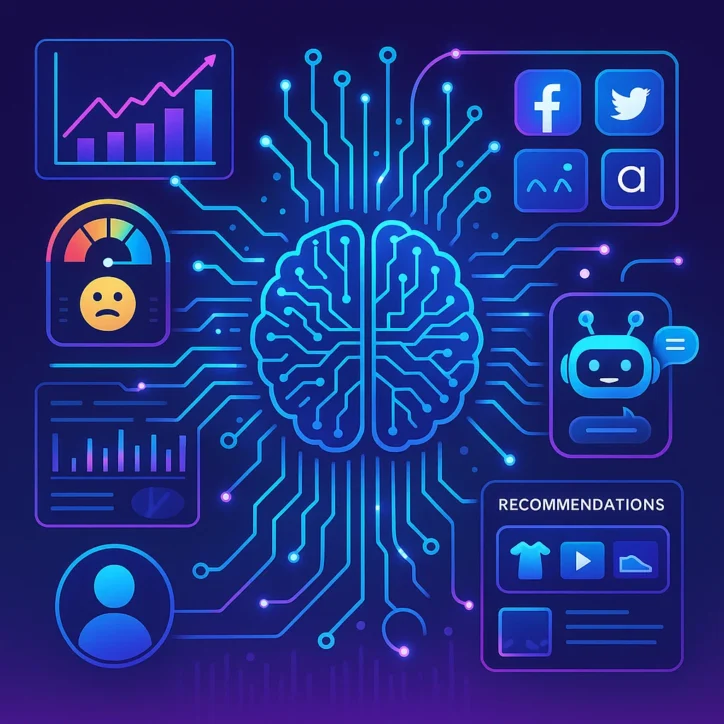
Artificial intelligence is transforming digital marketing by introducing intelligent automation that streamlines decision-making and enhances campaign precision. AI-powered tools can analyze vast amounts of real-time data to:

  • Detect patterns
  • Predict user behavior
  • Suggest content strategies tailored to specific audience segments

From chatbots that offer instant customer support to recommendation engines that personalize user experiences, AI applications are reshaping how brands connect with consumers.

Additionally, natural language processing (NLP) enables sentiment analysis, allowing marketers to gauge public opinion and adjust messaging accordingly. This level of automation not only saves time but also ensures more impactful, data-driven outcomes across marketing channels.

Software Foundation in Healthcare and Medical Applications

Healthcare systems worldwide depend on sophisticated software solutions. Nowadays, software is seen to help manage patient records, coordinate treatment plans, and ensure regulatory compliance across multiple departments. Electronic health records platforms enable seamless information sharing between medical professionals while maintaining strict security protocols.

These systems process millions of data points daily, supporting critical decision-making processes that directly impact patient outcomes.

Medical imaging software has revolutionized diagnostic capabilities, allowing physicians to detect conditions earlier and with greater precision than traditional methods. Advanced algorithms analyze complex medical data patterns, providing healthcare professionals with detailed insights that improve treatment efficacy.

Educational Technology and Learning Management Systems

Educational institutions leverage comprehensive software platforms to deliver personalized learning experiences that adapt to individual student needs and learning styles. These systems track student progress, identify knowledge gaps, and recommend targeted interventions that improve academic outcomes. Interactive learning modules engage students through multimedia content and real-time feedback mechanisms.

Administrative software streamlines educational operations, from enrollment management to grade tracking and parent communication.

Data-Driven Personalization and Operational Efficiency

The integration of data analytics into educational technology enables a more personalized and effective learning journey. Learning management systems (LMS) use real-time data to adjust content difficulty, suggest supplementary resources, and support differentiated instruction. This ensures that students receive the right level of challenge and support, fostering both engagement and achievement.

Financial Services and Banking Software Infrastructure

Financial institutions rely on robust software architectures to process transactions securely, manage risk assessments, and comply with regulatory requirements across multiple jurisdictions. These systems handle billions of transactions daily while maintaining accuracy and security standards that protect customer assets and personal information.

Algorithmic trading platforms execute complex financial strategies automatically, analyzing market conditions and executing trades within milliseconds. These sophisticated systems incorporate machine learning capabilities that continuously improve trading performance based on historical data and market trends.


Your Accounts could Get shadowbanned in Reddit if you’re not aware in this Software Guidelines

Breakthroughs in software computing have significantly transformed the digital landscape, pushing the boundaries of technology and innovation. However, as advancements continue, it’s essential to recognize potential risks, especially in online communities. For instance, your accounts could get shadowbanned in Reddit if they fail to comply with platform guidelines, limiting user engagement and visibility.

This issue highlights the importance of understanding software-driven algorithms that regulate online spaces. With the rapid growth of artificial intelligence, cloud computing, and blockchain technology, software computing is evolving at an unprecedented rate, shaping industries and everyday digital interactions.

Artificial Intelligence in Software Computing

Artificial intelligence (AI) has become a driving force in modern software computing, revolutionizing industries and personal technology alike.

From machine learning algorithms predicting user preferences to AI-driven automation enhancing efficiency, the impact is undeniable.

Businesses now integrate AI for data analysis, virtual assistants, and real-time customer support, reducing human intervention while increasing accuracy. Additionally, AI-powered cybersecurity tools detect and mitigate threats faster than traditional methods, while AI-driven content creation is transforming marketing strategies.

With AI’s growing influence, software development trends continue to push boundaries, leading to smarter, more adaptive applications that enhance user experiences, streamline operations, and open new possibilities for innovation across various fields.

Cloud Computing’s Role in Software Advancement

Cloud computing has significantly transformed software accessibility, providing scalable and cost-effective solutions for businesses and individuals. With platforms like AWS, Google Cloud, and Microsoft Azure, users can deploy applications, store vast amounts of data, and ensure seamless collaboration across different locations.

The shift from traditional software installation to cloud-based services enables businesses to streamline operations, reduce hardware dependency, and enhance security measures. This evolution has paved the way for more flexible and accessible digital environments.

Quantum Computing and Potential Disruption

Quantum computing stands as one of the most groundbreaking advancements in software computing. Unlike classical computers, which process data in binary, quantum computers leverage qubits to perform complex calculations at unprecedented speeds. Tech giants such as IBM and Google are actively researching quantum applications, aiming to solve problems that traditional computing cannot.

While still in its early stages, quantum computing holds promise in revolutionizing fields like cryptography, logistics, and artificial intelligence, ultimately redefining what is possible in software computing.

The Impact of Low-Code/No-Code Platforms

Effective software development solutions are needed more than ever in the modern, fast-paced digital environment. Now for the game-changing invention revolutionizing how apps are developed and deployed: low-code/no-code platforms are used. For instance, it might have taken advantage of such platform so by that, developers can leverage intuitive interfaces and pre-built components to streamline the app development process, reducing time-to-market and enhancing overall efficiency.

Understanding Low-Code/No-Code Platforms

Low-code/no-code platforms revolutionize software development by enabling users to make their own applications with minimal to zero skills in coding. These platforms provide intuitive visual interfaces and pre-built components, allowing users to rapidly design, develop, and deploy applications without extensive programming skills.

Understanding the features and functionalities of low-code/no-code platforms is crucial for harnessing their full potential in app development projects.

Democratizing App Development

One of the most significant advantages of low-code/no-code platforms is their ability to democratize app development. By empowering developers and non-technical users to create applications, these platforms break down traditional barriers to enter software development space. Now, individuals across various industries and sectors can contribute to app development projects, driving innovation and creativity in the digital space.

Accelerating Time to Market

In today’s competitive market, speed is of the essence. Low-code/no-code platforms offer a significant advantage by accelerating the time to market for applications. With their intuitive interfaces and drag-and-drop functionality, developers can build and deploy applications in no time than conventional methods. This rapid development cycle enables businesses to respond fast to a dynamic market and gain edge among their competition.

Impact on Software Development Landscape

The widespread adoption of low-code/no-code platforms reshapes the software development landscape. These platforms are disrupting traditional development approaches by democratizing app development and accelerating time to market. As a result, professional developers are embracing these platforms as valuable tools that enhance their productivity and efficiency. The rise of low-code/no-code platforms signals a fundamental shift in how applications are created, paving the way for a more agile and innovative software development process.

Low-code/no-code platforms represent a paradigm shift in software development, offering a user-friendly and efficient solution for building applications. By democratizing app development and accelerating market time, these platforms empower businesses and individuals to innovate and thrive in today’s digital age.